
Surface pattern design begins with the surface it must serve
Surface pattern design is artwork created for a product surface, usually in a repeatable format that can continue across the finished material. Instead of treating the artwork as an isolated image, you consider how it will occupy fabric, wallpaper, stationery, upholstery, ceramics, packaging, furniture, or another surface.
Your product surface should be the first decision in a decor project. Wallpaper may need a pattern that carries across a broad area, while stationery or a smaller home good may show only part of a repeat. The application gives you a practical frame for judging the artwork’s coverage, scale, colors, and placement.
A continuing pattern is designed to extend across a surface, while a standalone illustration may occupy one placement. That sequence helps you decide whether a repeat-ready design belongs in the project before you discuss commissioning or licensing.
A repeat turns artwork into a continuing surface treatment
A repeat-ready pattern is arranged so its edges connect as the design extends across a surface. The result is a continuing treatment rather than a single image with a fixed boundary. Fabric and wallpaper are clear examples because the pattern may need to cover more area than one original artwork can occupy.
The intended surface and printing method can affect how a pattern’s design and colors are prepared. A pattern for wallpaper should therefore be discussed in relation to the material and production context, rather than treated as automatically identical to a pattern for fabric, stationery, or another surface.
A practical project sequence keeps the concept manageable:
- Name the product or surface first.
- Decide whether the artwork should repeat across it or occupy one defined area.
- Estimate the visible area and the distance from which you will see it.
- Identify the colors, motifs, and overall feeling that need to work in that setting.
- Ask how the surface and printing method will affect preparation.
This sequence is a planning aid, not a software tutorial. It gives you a clearer brief before you compare design routes.
Separate a repeat-ready pattern from a standalone watercolor illustration
Surface design can include both repeating patterns and single, non-repeating illustrations. A single illustration made for a shirt can be surface design without being pattern design, while a repeating floral print for fabric can be both surface design and pattern design.
A standalone watercolor illustration is generally planned as one placement: a defined image can sit above a console, inside a frame, or on one product panel. A repeat-ready pattern is planned to continue across the surface. The distinction is not whether the artwork looks painterly; the distinction is how you intend to use it.
Your subject may work in either format, but the format changes the questions you need to answer. Choose a standalone illustration when one focal image carries the idea. Choose a repeat when the design needs to act as a continuing visual language across wallpaper, fabric, or another product. If you want both, ask whether the same motifs should be developed as a single placement and as a repeat-ready arrangement.
Read the pattern through its motifs and repeat structure
A pattern’s visual structure is shaped by its motifs, the way those motifs repeat, their scale, and their colors. Motifs are the recognizable subjects or marks in the design. Their arrangement determines what you notice as the pattern travels across the surface, whether the overall effect feels quiet and evenly distributed or more visually concentrated.
Common repeat structures include straight, half-drop, and brick repeats. You do not need to choose a repeat structure by name before you have defined the product. Ask how the proposed structure distributes motifs across the actual surface and whether its rhythm supports the object you want to decorate.
Use these questions to read a pattern before you commit to an application:
- What motif should you recognize first?
- Does the design feel evenly distributed, or does it create deliberate areas of emphasis?
- Do the motifs need to face a particular direction on the product?
- How much open space should appear between the motifs?
- Will the repeat be easy to read on a small object, or does it need more room?
- Does the repeat support the room’s existing visual language rather than compete with every nearby surface?
These questions turn a general preference for a pattern into a usable decor brief.
See how scale and color change a pattern’s home-decor effect
Pattern scale is a fit question between the motif and the product. A large motif may need enough visible surface for its shape to be understood, while a small repeat may suit an object where only a limited area is visible. Compare the design at the size you expect to see on the finished wallpaper, fabric, stationery, or home good rather than judging a small digital preview alone.
The application changes what scale needs to accomplish. On wallpaper, you may see several repeat units across a wall, so the rhythm between motifs matters as much as any single detail.
Pattern color is also an application question. Compare the proposed palette with the wall, furniture, textiles, and finishes that will sit near it, then consider how the intended printing method may affect color preparation. A palette that feels balanced in an isolated image may need a different review when it covers a wall or appears beside existing decor.
Home-decor comparison works best when you test one variable at a time:
- Motif: Is the subject personal, familiar, botanical, geometric, or abstract enough for the room?
- Scale: Can you see the motif clearly at the product’s intended size and viewing distance?
- Repetition: Does the arrangement feel suited to a broad surface or a smaller object?
- Color: Does the palette connect with the room without requiring every nearby item to match?
- Surface: Does the material support the visual character you want from the design?
The goal is not to find a universal pattern size or palette. The goal is to define the conditions that make one design appropriate for your particular application.
Match the design role to the product and specialist involved
Surface pattern work focuses on artwork for product surfaces, including applications such as wallpaper, fabric, stationery, furniture, and other goods. If your main question is how a motif, repeat, scale, and palette should appear across a surface, this is the design role to explore.
Product design addresses a different part of the project. Product designers typically work with three-dimensional form, materials, manufacturing processes, and restrictions created by production methods. If the object itself needs to be developed or changed, you may need product-design input in addition to artwork for its surface.
Textile design overlaps with surface pattern work but concentrates on textiles and the technical parameters of fabric production, including weaving, dyeing, and knit structures. That distinction matters if your project involves fabric behavior or manufacturing questions rather than only the visual pattern.
We specialize in watercolor illustration and surface pattern design. We create repeatable surface pattern designs for applications including textiles and wallpapers. Share the intended product and surface when you reach out so the design conversation begins with the right application.
Choose between commissioning and licensing for the intended use
Commissioning and licensing solve different project questions. Commissioning may suit you when the pattern needs to be developed around a particular room, product, motif, palette, or repeat requirement. Licensing may suit you when an existing pattern fits the intended use and you need permission for another party to reproduce or distribute products featuring it.
Commissioning is worth exploring when the design idea is specific enough to describe but does not yet exist in the form you need. Prepare the product application, preferred motifs, approximate scale, palette, and whether the artwork should repeat. A designer can then assess the brief as a pattern project rather than as a request for a general illustration.
Licensing is one way artwork can appear on commercial products while the designer retains ownership. The agreement controls the specific terms, so the permission should be discussed in relation to the intended product and use rather than assumed from the artwork alone.
Licensing arrangements may involve collaboration agreements, contractual obligations, and royalties. Applicable terms depend on the agreement and the parties involved. For a project that will place artwork on products for wider distribution, ask who may use the design, which products are included, and what responsibilities each party accepts before you proceed.
Prepare a designer-ready pattern project brief
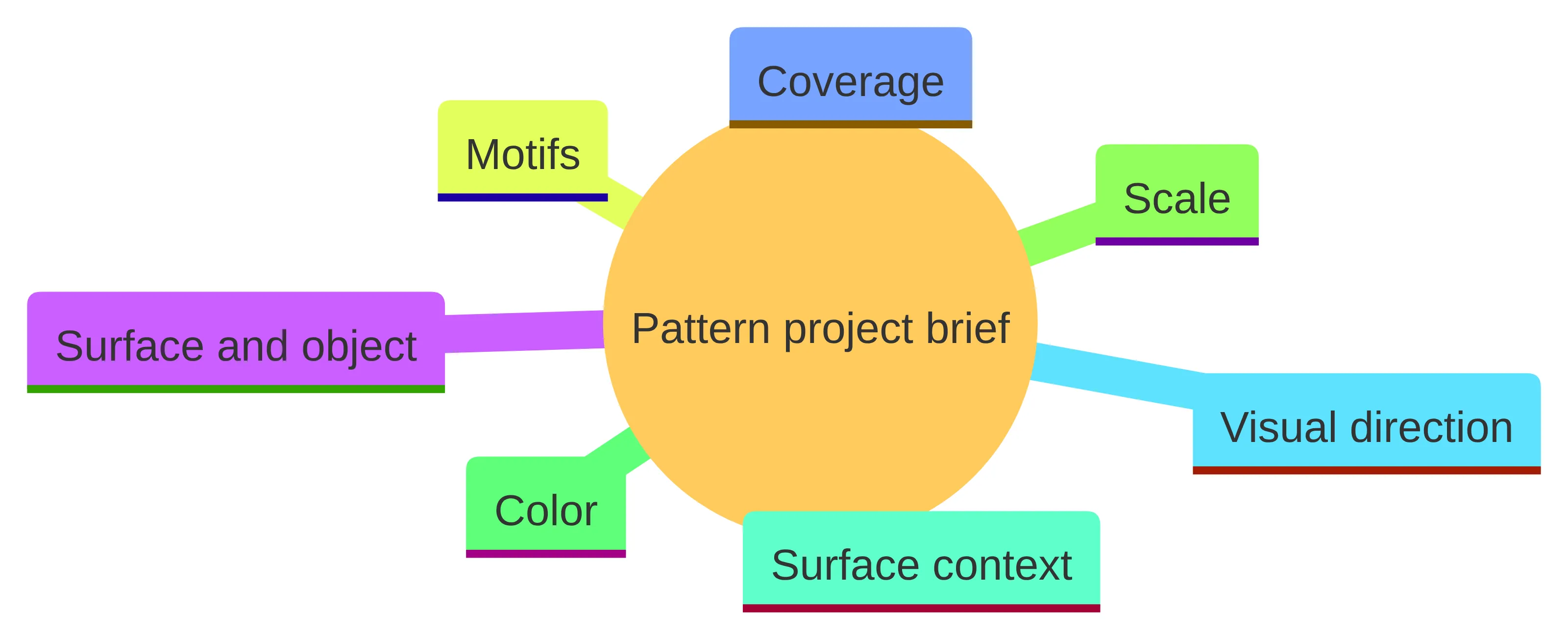
A project brief should describe the surface the pattern must serve and the decisions that will shape its preparation. The brief gives you a practical way to organize the idea before contacting a designer, comparing a commissioned route with an existing design, or discussing licensing.
Your product application is the first line of the brief. Add the following details:
- Surface and object: Name the wallpaper, fabric, stationery, upholstery, ceramic, furniture, or other product you have in mind.
- Coverage: Explain whether the design should repeat across the surface or remain as one placement.
- Motifs: List the subjects, references, or visual ideas you want included.
- Scale: Describe whether the pattern should read as a fine background, a prominent motif, or something between those options.
- Color: Include your preferred palette and the colors already present in the room or product setting.
- Surface context: Note the material and any known printing or production context because those conditions can affect design and color preparation.
- Visual direction: Describe the balance between watercolor character, simplified shape, detail, and open space that you want to explore.
Questions before contacting a designer should clarify fit and responsibility:
- Is the intended artwork a standalone illustration, a repeat-ready pattern, or both?
- Which product surface will show the design, and how much of the repeat will be visible?
- Which motifs, colors, and scale choices are essential rather than optional?
- Does the proposed repeat structure suit the product’s shape and coverage?
- Will the project involve one personal decor application or products that another party will reproduce or distribute?
- Should you discuss commissioning a new design, licensing an existing design, or keeping both routes open?
- Which rights and permitted uses need to be addressed in the agreement?
These questions organize the design conversation and keep the application from getting lost behind a general style description.
A finished brief can be short, but it should be concrete. A sentence such as “I want a repeat-ready watercolor botanical pattern for wallpaper in a defined room palette” gives a designer more direction than “I want something pretty for the room.” Add reference images or sketches when they explain the motif, scale, or atmosphere you have in mind.
Take the next step with the product application defined
A defined product surface, a clear choice between one placement and a continuing repeat, and a short design brief give you a sound basis for deciding whether to commission a new pattern or explore licensing for an existing one. Keep the intended product and permitted use visible as the project develops, because those details shape the design conversation and the agreement.
A qualified professional should determine your individual suitability for any contract or licensing arrangement. For the design discussion, bring your product application, motifs, scale, palette, repeat preference, and intended use together in one clear brief.
What should you clarify before discussing a surface pattern project?
What is surface pattern design?
Surface pattern design involves creating decorative patterns that can be applied to various surfaces, such as fabric, wallpaper, and stationery, typically in a repeatable format.
What distinguishes surface pattern design from standalone illustrations?
Surface pattern design focuses on creating repeating patterns for surfaces, while standalone illustrations are typically single images intended for specific placements.
What factors should I consider when choosing a pattern for home decor?
Consider the scale of the pattern, the motifs used, the colors, and how the pattern will be applied to the surface, as these elements affect the overall aesthetic and fit within your space.
When should I consider commissioning a pattern design?
Commissioning is suitable when you have specific requirements for a pattern that does not yet exist, such as particular motifs, colors, or a unique repeat structure.
What questions should I ask before contacting a designer for a pattern project?
Clarify whether you need a repeat-ready pattern or a standalone illustration, the intended product surface, essential motifs and colors, and whether the project involves licensing or commissioning.
What are the common repeat structures in surface pattern design?
Common repeat structures include straight, half-drop, and brick repeats, which determine how motifs are arranged across the surface.


comments +