
Test a custom watercolor idea before you inquire
A custom watercolor idea is easier to discuss when its subject, reference material, and project terms are clear. For home decor, assess the commission itself before treating the artwork as a settled choice. The useful question is whether you can explain what should be painted, what the reference image shows, and what you need to confirm with the artist.
Start with the subject and its purpose. A home, wedding venue, or another meaningful place may be a suitable subject for a personalized watercolor when you have a clear reference image. Tell the artist why the subject matters: the purpose of a commission can influence composition, expression, and atmosphere. A commissioned portrait may carry emotional value through the story behind it rather than visual likeness alone, and a watercolor portrait can preserve a personal memory through artistic interpretation.
Screen the reference image. The quality of a reference photo, the artist’s style, and the details in your brief can all shape how the finished piece feels. Some photos may need thoughtful adjustments to composition, lighting, or background before they translate well into watercolor. For a wedding-venue reference, cited guidance recommends a high-resolution, clear, well-lit photo, with daylight or a well-lit indoor setting. It also discourages blurry, low-quality, backlit, or unclear images. Too many small details can make a portrait look busy and distract from its main subject.
Write the inquiry brief. Before making contact, prepare the subject, desired size, mood, reference images, timeline, and budget. You can also describe which part of the image matters most and whether any composition, lighting, or background adjustment may be needed. A concise brief gives the project a defined starting point without assuming that its final format or terms are already settled.
Confirm the terms before proceeding. Ask about the size, medium, scope, deadline, price, payment terms, revision boundaries, and project checkpoints, and put the agreed terms in writing. Do not assume a price, format, or timing from a general example. Some watercolor commission processes include uploading reference photos, reviewing a preliminary sketch, reviewing a photo of the final piece, and then receiving the artwork; treat those as points to confirm rather than as a universal sequence.
When the subject, usable reference image, desired style, brief, and questions about terms are ready, use the Start now form to share the project details and begin an inquiry with Kelly Swain.
Run the commission-readiness test
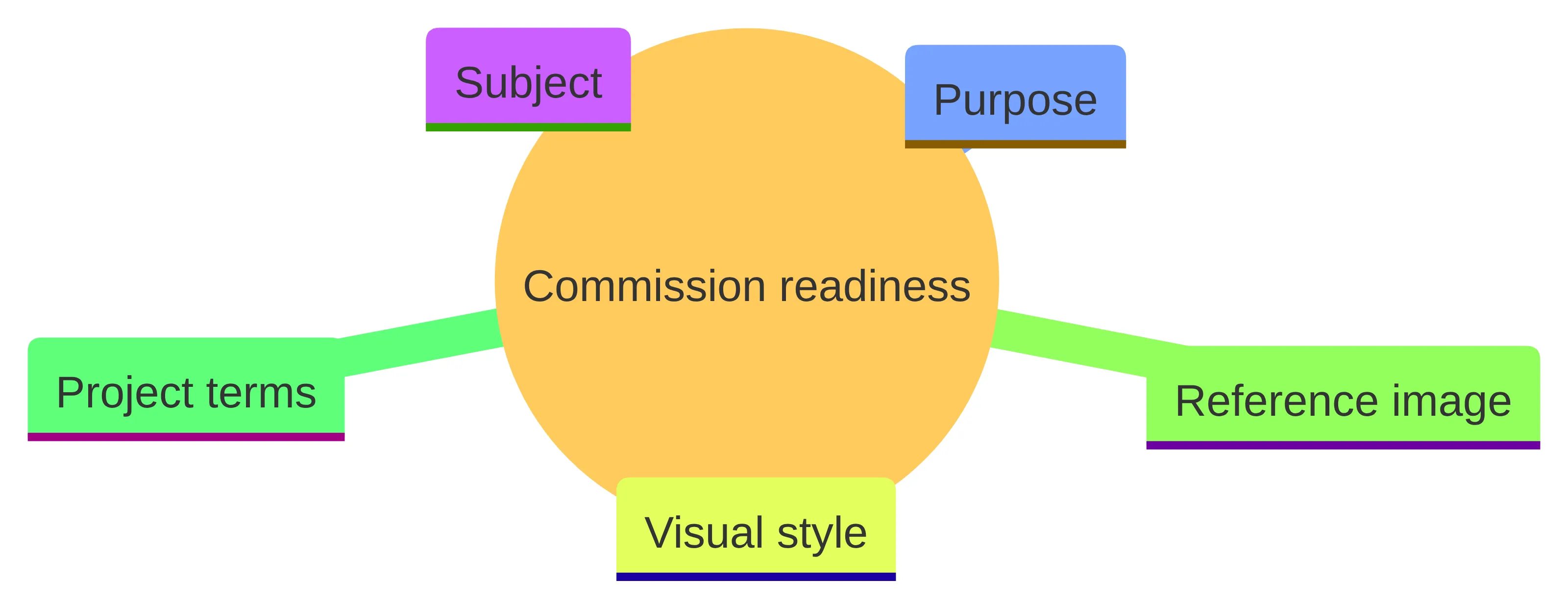
A custom watercolor commission is ready for an inquiry when you can answer five practical questions without forcing the project to become more definite than it is.
- What subject should the artwork show? Name the home, wedding venue, building, or place rather than beginning with the vague request for “something personal.”
- Why does that subject belong in your home? A gift, anniversary, move, wedding, memorial, or connection to a particular place can change the way the composition should feel. The purpose of a commission can influence composition, expression, and atmosphere.
- What visual style do you want? Match your brief to an artist whose existing body of work fits the desired style instead of asking that artist to work outside it. The artist’s style should connect with you, and the visible portfolio should give you a realistic sense of the result.
- Some photos need adjustments to composition, lighting, or background before they translate well into watercolor.
- Can you discuss the project terms? A useful brief covers the subject, size, mood, reference images, timeline, and budget. The commission process also needs clear decisions about scope, price, payment terms, revisions, and checkpoints.
The test is not a demand for a finished concept. It is a boundary for deciding whether an inquiry can be specific enough to be useful. If you can answer most questions but not all of them, send the open question with the rest of your brief. If you cannot yet identify the subject, style, or reference image, choose a general artwork direction first and return to commissioning when those choices become clearer.
Check the artwork against its place in the room
Artwork placement should be decided with the wall, furniture, viewing distance, and surrounding visual weight in mind. A meaningful subject can still feel misplaced if the format is too small for the furniture below it, too crowded for the wall, or disconnected from the room’s existing colors and shapes.
Start with the physical setting:
- Measure the open wall area rather than estimating from memory.
- Record the width of the sofa, console, bed, or other furniture below the artwork.
- Note whether the wall suits a horizontal, vertical, or more compact composition.
- Look at the colors already present in nearby textiles, paint, wood, and frames.
- Decide whether the artwork should lead the room visually or support another focal point.
For artwork above a sofa, one wall-art guide recommends a piece about two-thirds of the sofa’s width. The same guide recommends leaving about 6 to 8 inches between the bottom of the frame and the couch back. Treat those measurements as a starting point for a layout decision, not as a universal requirement for every room.
A custom watercolor can be planned around the available wall, but customization does not remove the need to think about scale. Tell the artist where the piece will go and what furniture or architectural feature will sit near it. That context can help you discuss the intended orientation and subject emphasis without assuming that every detail in the room belongs in the painting.
The room-fit decision also affects the reference image. A photograph with a broad surrounding background may be useful when the setting is part of the meaning, while a tighter view may be more suitable when the building or subject itself should dominate. The choice depends on what the artwork must show and how much visual information the room can carry. Choose the image and format together rather than treating the photograph as an isolated file.
Decide whether personalization adds the right meaning
Personalized watercolor artwork earns consideration when the subject means something beyond its appearance. A home may represent a first purchase, a family chapter, or a place you are leaving. A wedding venue may hold the memory of a particular day. A meaningful building can connect the finished piece to a person, occasion, or shared story.
A custom watercolor portrait can depict a wedding venue or another meaningful building when you have a clear reference photo. That possibility does not make every subject a good commission. The subject still needs to fit the room, the desired visual style, and the amount of detail that can be expressed clearly.
Use this meaning test:
- Recognition: Would you still care about the subject if the artwork interpreted it rather than reproduced every detail?
- Longevity: Does the connection belong to your home or gift plan beyond a short-lived decorating trend?
- Room relationship: Can the subject sit comfortably beside the colors, furniture, and scale already present?
- Emotional emphasis: Do you want the image to communicate the place itself, the event associated with it, or the people connected to it?
- Reference readiness: Can you show the artist which visual features matter and which details may be left out?
A commissioned portrait’s emotional value may come from the story behind it, not only from visual likeness. That makes the brief more than a description of an object. Explain the memory or purpose so the artist can understand what the image needs to carry.
Choose a general artwork direction when personalization would add a name or location without adding meaning, when the subject does not fit the room, or when you are unsure what you want the image to communicate. Choose a custom watercolor direction when the subject has durable meaning and you are comfortable allowing artistic interpretation within an agreed brief.
Match the subject to the artist’s visible style
Review visible work with a specific subject in mind. Ask yourself:
- Does the handling of buildings, nature, people, or surrounding space resemble the kind of interpretation you want?
- Does the level of detail feel appropriate for your room and the story behind the subject?
- Do the colors and atmosphere belong with the mood you want to create?
- Would you be comfortable with the artist making choices about composition, background, and emphasis?
- Can you describe what you respond to without asking for a style that the existing work does not show?
Watercolor illustration and surface pattern design are our stated areas of specialization. If you are considering a watercolor illustration for your home, compare your subject and desired mood with the visible watercolor work before you write the brief. A subject can be suitable in principle while still being a poor match for the particular visual language you want.
Style matching also protects the decision from becoming too broad. “Make it look like this other artist” is less useful than describing the qualities you see in the work you are considering: a quiet architectural view, a loose treatment of surrounding foliage, a restrained palette, or a stronger focus on recognizable structure. Use descriptions that clarify your preference without turning another artist’s work into a requested template.
If the visible style fits the subject and the room, continue to the reference-photo and brief checks. If the style does not fit, change the artist or change the desired artwork direction before discussing price or timing.
Prepare a reference image that can carry the idea
A reference image should give the artist enough visual information to understand the subject and enough direction to know what matters most. The photograph does not need to dictate every artistic decision, but it needs to support the idea you want the finished watercolor to carry.
Prepare your image with these checks:
- Clarity: Use an image in which the main subject is easy to identify.
- Light: Prefer even, useful lighting that shows the subject’s structure and relevant details.
- Angle: Choose a view that communicates the part of the home, venue, or building you want remembered.
- Background: Decide whether the surrounding setting supports the story or distracts from the main subject.
- Detail: Remove visual confusion from your brief by identifying which small features matter and which can be omitted.
- Purpose: Explain whether the image is meant to show a place, a mood, a particular architectural feature, or the setting around an event.
For a wedding-venue watercolor, cited venue-painting guidance recommends a high-resolution, clear, well-lit photo; daylight or a well-lit indoor setting is recommended. Blurry, low-quality, backlit, or unclear venue images are discouraged. Excessive small details can make the portrait look busy and distract from the main subject.
Those venue-specific recommendations should not be stretched into a universal promise about every subject. Apply them directly when the subject is a wedding venue, and use the broader quality and composition checks for a home or other meaningful building. If your available photo is weak, describe the problem in the inquiry and ask what kind of additional image would make the subject easier to interpret.
Turn the idea into an inquiry brief
An inquiry brief should turn your decorating idea into a short set of decisions another person can understand. A cited watercolor commission guide recommends covering the subject, size, mood, reference images, timeline, and budget. The purpose of the commission can also influence composition, expression, and atmosphere, so include the reason the artwork matters rather than sending only a photograph.
Use this structure:
- Subject: Name the home, venue, building, or place and identify the features you want represented.
- Purpose: Explain whether the piece is for your own home, a gift, a wedding memory, a move, an anniversary, or another occasion.
- Room: Describe where you expect to display it, including the available wall area and nearby furniture when those details affect format.
- Mood: Use a few direct words for the feeling you want the artwork to carry, such as quiet, welcoming, celebratory, or atmospheric.
- Reference images: Attach the clearest available image and explain which details deserve attention.
- Format: State the size or range you are considering, along with any preference that affects the final presentation.
- Timing: Give the date or general period connected to your gift, move, event, or display plan.
- Budget: State the amount you have planned or ask what range applies before you proceed.
A useful brief separates fixed requirements from open questions. “The venue must be recognizable” is a requirement. “I am unsure whether a wider view or a closer view will suit the composition” is an open question. Both belong in the inquiry, but they should not be treated as equally settled.
Avoid asking for a watercolor portrait with no subject emphasis, no reference image, and no indication of where it will go. That request leaves the creative direction and the practical format undefined. You do not need to control every artistic decision, but you do need to explain the meaning, setting, and conditions that the artist should work within.
Confirm the terms before committing
Commission terms should be clear before you treat the project as part of your home-decor plan. A general art-commission process includes confirming the size, medium, scope, deadline, price, payment terms, revision boundaries, and project checkpoints in writing. Use those points to turn an appealing idea into an arrangement you can evaluate.
Ask for clear answers to these questions:
- What exactly is included in the artwork, and which parts of the reference image will be interpreted or left out?
- What size, format, and medium are available for the intended display?
- What date or time window applies to the project?
- What is the price, and what does that price cover?
- When are payments due, and is an initial payment required before work begins?
- When is the remaining balance due in relation to delivery or shipment?
- How many revision opportunities are included, and at which stage can you request changes?
- Will you review a preliminary sketch, a progress checkpoint, a photograph of the finished piece, or another stage before delivery?
- What happens if the reference image or requested changes alter the agreed scope?
The payment schedule deserves particular attention. One cited commission guide recommends confirming any initial payment and the balance due before delivery or shipment before work begins. Treat the schedule as a project term, not as an assumption.
Some watercolor commission processes include uploading reference photos, reviewing a preliminary sketch, approving a photo of the final piece, and then receiving the artwork. That sequence is an example of a possible process, not a universal condition. Ask which checkpoints apply to the project you are considering and what each checkpoint allows you to change.
Pricing, timing, size, availability, and revision terms are not fixed by the general idea of a watercolor commission. Keep those details open until they are discussed for your particular subject and brief. If the terms do not fit your room plan, gift date, or budget, pause the commission and choose a different artwork direction rather than relying on an unstated assumption.
Use the form to document the commission details
Prepare the inquiry around the subject, size, mood, reference image, timeline, and budget. Add questions about scope or revisions when those points need clarification. This keeps the commission discussion focused without requiring you to settle every creative choice in advance.
We specialize in watercolor illustration and surface pattern design. Before proceeding, confirm the size, medium, scope, deadline, price, payment terms, revision boundaries, and project checkpoints in writing.
When the brief and terms are ready to discuss, use the Start now form to begin an inquiry.
What should you ask before commissioning personalized watercolor artwork?
What should I consider when choosing artwork for my home decor?
Begin by identifying the job the artwork must do in the room, such as serving as a focal point or complementing existing decor. Consider whether you want a ready-made piece or a personalized watercolor that carries emotional significance.
How can I determine if a personalized watercolor artwork is suitable for my space?
Evaluate if the subject of the artwork has lasting personal meaning and if it fits well with the room’s colors, furniture, and overall atmosphere. Ensure you can provide a clear reference image and articulate the desired style.
What details should I prepare before inquiring about a custom watercolor commission?
Prepare a brief that includes the subject, purpose, desired mood, reference images, size, format, timeline, and budget. This will help the artist understand your vision and requirements.
What are the key terms I should confirm before committing to a commission?
Clarify the size, medium, scope, deadline, price, payment terms, revision opportunities, and any checkpoints for reviewing the artwork during the process.
What type of reference photo is best for a watercolor commission?
Use a high-resolution, clear, and well-lit photo that captures the subject effectively. Avoid blurry or low-quality images, and ensure the photo conveys the essential details you want included in the artwork.
How can I ensure the artist's style matches my vision for the artwork?
Review the artist’s portfolio to see if their existing work aligns with your desired style. Look for qualities in their work that resonate with you and communicate those preferences in your brief.


comments +