
Start with the place you want to preserve
A custom watercolor house portrait gives you a way to focus a gift on a place that already carries meaning. The subject might be a first home, a family house, or a property connected with a particular chapter of your life. The decision is less about filling an empty wall and more about deciding whether that place is the story you want the artwork to hold.
A house portrait may suit a housewarming when the home already carries personal meaning. Those descriptions do not make the gift right for every occasion, but they show why a home can carry more significance than a generic decorative subject.
Start by asking what you want the recipient to recognize when they see the image:
- Is the home connected with a move, a shared milestone, or a place the recipient has worked hard to make their own?
- Would the recipient value a personal reference more than a ready-made image?
- Does the home have a recognizable façade, doorway, garden, porch, or surrounding detail that makes it feel like theirs?
- Would the recipient enjoy choosing how the place is represented, or would the surprise matter more than the planning?
A strong answer to those questions points toward a commission. A vague answer is a reason to pause, not a reason to force the idea. Begin with the place, then test the recipient, the visual style, the reference material, and the practical terms.
You can also use the place to shape the gift message. A sentence about the doorway where you welcomed guests, the first garden you planted, or the home where a family grew gives the portrait a personal frame without requiring the artwork itself to carry every part of the story.
Understand what makes a house portrait custom
A custom house portrait starts with a particular place rather than a subject chosen from an existing catalogue. One published listing describes a house portrait as hand-painted watercolor or ink-and-pen artwork on paper, created from a photograph, with the piece described there as original, one-of-a-kind, and signed by the artist. That description belongs to the listing that published it; it is not a universal specification for every commission.
We specialize in watercolor illustration and surface pattern design. For a home portrait inquiry, that watercolor specialization matters because you are discussing an interpretation of a real place rather than ordering a standard image. The final conversation may need to cover the view of the home, the details that deserve attention, and the visual character you want the piece to have.
The word custom can refer to several different decisions. Separate them before you inquire:
- Subject: the home, building, or portion of the property that should appear.
- View: the angle or main photograph that gives the subject its identity.
- Details: features to retain, add, remove, or adjust.
- Medium and treatment: watercolor, ink-and-pen work, or the treatment offered for the proposed commission.
- Presentation: the physical size and whether matting or framing is part of the arrangement.
A custom commission does not automatically mean that every surrounding object will appear exactly as it does in a photograph. It means the subject can be discussed as a specific piece rather than selected as a fixed design. Ask what can be adjusted before you assume that a desired change is included. The point of the inquiry is to turn your attachment to the place into a clear brief.
This distinction also helps you compare a portrait with a standard print. A ready-made image can suit you when the existing subject and style already fit. A commission becomes more relevant when the identity of one particular home, venue, or place is the reason you want the artwork.
Overview
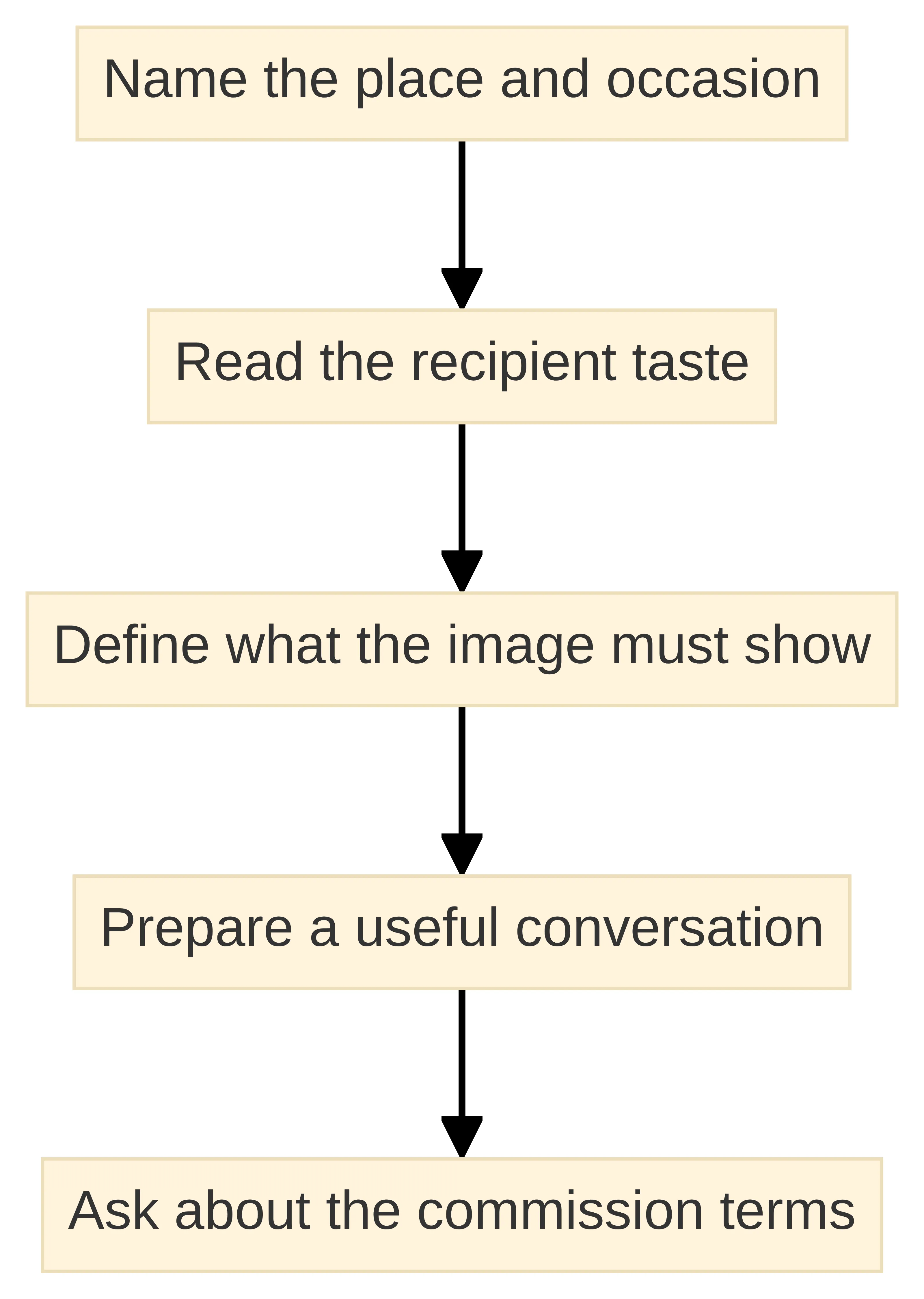
A practical decision for a custom home portrait has five parts: meaning, visual fit, subject, reference material, and terms. Work through them in that order so the emotional reason for the gift remains connected to the practical request.
- Name the place and occasion. Decide why this home deserves to be remembered and whether the recipient would welcome a personal image of it.
- Read the recipient’s taste. Look at the art, colors, rooms, and objects they already choose. The artwork’s style should resonate with personal taste and enhance home design.
- Define what the image must show. Identify the architectural feature or view that makes the property recognizable, then separate essential details from optional ones.
- Prepare a useful conversation. Gather the clearest reference photo you have, add other views when they answer a detail question, and write down changes you want to discuss.
- Ask about the commission’s terms. Discuss size, price, timing, presentation, photo suitability, possible adjustments, and any approval or revision arrangements before you make the gift plan depend on them.
This sequence keeps you from choosing an occasion first and discovering later that the recipient dislikes the style or that the available reference cannot show the feature you had in mind. It also keeps provider-specific examples in their proper place: they can help you form questions, but they cannot establish what another artist offers.
Use the rest of this guide as a decision worksheet. You do not need a fully solved brief before sending an inquiry. You do need enough clarity to explain the place, the recipient, and the questions that affect your choice.
A simple working note can keep the decision manageable. Write five headings—meaning, taste, subject, references, and terms—and add only the details you already know under each. Leave the uncertain points as questions rather than filling them with assumptions.
Test the meaning before choosing the occasion
The occasion should explain why this particular place belongs in the gift. These are examples of possible contexts, not a rule that a portrait must mark a formal event.
Begin with the recipient’s connection to the place, rather than with the calendar occasion. That may be the first house a couple shared, the property where a family spent many years, or a new home that represents a change the recipient is proud of. The gift becomes less suitable when the address is meaningful only to you, while the recipient has little attachment to the building or prefers gifts with a different kind of personal reference.
Test the occasion with three questions:
- Whose memory is being preserved? If the answer is mainly yours, consider whether the recipient will understand the meaning without a long explanation.
- What does the home represent? Name the transition, relationship, or period that makes the place worth depicting.
- Would the recipient choose this subject? You can keep the commission a surprise while still using what you know about their taste and attachment to the property.
The answers can also guide the message that accompanies the gift. A housewarming portrait might acknowledge a new beginning. An anniversary gift might point to a shared home or a place where a relationship grew. A closing gift might recognize the work involved in buying a home without assuming that the recipient wants a formal depiction of every exterior detail.
Choose the occasion only after you can explain the place in one or two sentences. If the explanation feels thin, wait until the subject has more meaning or choose a different kind of gift.
The same test applies when the portrait is for your own home. Ask whether you want to preserve a transition, a view, or a daily detail. That answer can help you decide whether the commission should emphasize the building itself or the feature that makes the place feel like home.
Match the portrait to the recipient’s visual taste
The recipient’s visual taste should guide the commission as much as the emotional meaning of the home. The artwork’s style should resonate with personal taste and enhance home design, and we specialize in watercolor illustration and surface pattern design. Those points give you a useful starting boundary: the subject may be personal, but the treatment still needs to feel at home with the person who will receive it.
Look at what the recipient already lives with rather than guessing from the occasion. Notice whether they prefer quiet and restrained images, visible line work, strong color, minimal surroundings, or a fuller scene. You are not trying to diagnose a fixed style category. You are looking for clues about what they enjoy seeing repeatedly.
Use this short comparison:
- If the recipient values recognition, prioritize a view and architectural details that make the property immediately familiar.
- If the recipient values atmosphere, discuss the mood, palette, season, or surrounding details that matter to them, while leaving the provider to explain what can be achieved.
- If the recipient prefers simple interiors, ask whether a restrained treatment or smaller presentation would suit the space better than a crowded scene.
- If the recipient displays personal objects or photographs, use those choices as clues about whether a detailed or more interpretive portrait would feel appropriate.
Check the intended room only after checking the person. Wall color and furniture can help you think about presentation, but they should not erase the reason for the gift. A portrait that matches the room while feeling unlike the recipient can be less successful than a piece with a stronger personal connection.
If you cannot tell what the recipient likes, do not invent a style brief on their behalf. Share the uncertainty in your inquiry and ask what visual directions are available. A clear question is more useful than a confident but inaccurate assumption.
For a surprise gift, use indirect clues rather than asking the recipient to choose a style. Notice the images they save, the art already displayed, or the colors repeated in their home. These clues will not settle every creative decision, but they can help you avoid choosing a treatment that conflicts with the person’s established preferences.
Decide what the image needs to show
The image needs a defined subject before anyone can judge whether a reference photo will support it. One selected artist describes choosing a main photo that shows the home’s architectural features, then making a rough pencil sketch and developing a detailed pen drawing. That example shows why the view is not a minor detail: the chosen angle helps determine which parts of the building become visible and recognizable.
Decide what belongs in the picture by separating the must-have elements from the negotiable ones:
- Must show: the façade, doorway, roofline, porch, distinctive window, garden feature, or other part that makes the place unmistakable to the recipient.
- Could show: seasonal plants, a path, a fence, a tree, a vehicle, or another surrounding detail that supports the memory.
- Could change: colors, small objects, signs, neighboring features, or background details that do not belong in the final story.
- Needs discussion: people, pets, additions, removals, or a different setting that cannot be inferred safely from the main photograph.
Selected commission examples invite you to note desired changes or additions, including color adjustments, removed objects, and added details. Other examples mention adding people or using extra views to show small features. Treat those possibilities as prompts for a conversation, not as automatic features of every commission.
Write your subject brief in plain language. For example: “Please make the front doorway and the flowering tree visible; the temporary sign can be left out; the blue door should remain blue.” That gives the artist a subject, a priority, and a requested change without pretending that every alteration is already agreed.
Avoid turning the portrait into a catalogue of everything present in the photograph. Too many requested details can obscure the feature that gives the home its meaning. Begin with the single view or architectural element the recipient would recognize first, then add only the details that support that recognition.
If the home has changed since the reference was taken, separate current facts from requested interpretation. Say which elements belong to the earlier view and which details you want represented differently. This makes the creative question easier to discuss than a vague request to make the image look more current.
Prepare reference photos as conversation starters
Reference photos are conversation starters, not a substitute for explaining what the place means to you. In selected examples, the artist starts with a reference photo, while extra photos can help show additional angles or small details. One provider says that a quick sidewalk photo is acceptable, and other selected examples describe sending a home photograph or a property-listing image.
Begin with the clearest view you already have. You do not need to assume that a professional photograph is required, because the supplied examples differ in what they accept. Instead, give the artist enough context to understand why you chose the image and what the image cannot show.
A useful reference set can include:
- one main view that shows the home or place you want represented;
- one or more additional angles when the main view hides a feature you want included;
- a close view of a doorway, sign, plant, window, or other small detail that carries meaning;
- a short note identifying changes between the photograph and the current property;
- a description of anything you would like added, removed, recolored, or left out.
One selected provider also describes a Google Street View screenshot or a property address as alternatives when no photo is available. That is a provider-specific option, so treat it as an example of a question you can ask rather than a general promise. If you are preparing an inquiry to Kelly Swain, explain what material you have and ask whether it is workable for the proposed subject.
Avoid presenting several nearly identical photographs without explaining why each one matters. More images do not automatically make the brief clearer. Label the main view and use the remaining images to answer a specific question about an angle, feature, or change.
If the property has changed, say so directly. A winter photograph, an earlier door color, a removed tree, or a new addition can affect the way you describe the requested result. The artist can then tell you which changes can be discussed and whether another reference would help.
Before sending the images, check that you can identify the subject in each file and explain its purpose. A supporting photo should answer a question that the main view leaves open. If it does not, leave it out or label it as background context.
List the changes and practical questions you want to discuss
Your inquiry should name both the creative changes and the practical questions that affect the gift. Selected commission examples invite you to request changes such as altered colors, removed objects, added people, or other details. Those examples support the value of asking clearly, but they do not establish which changes Kelly Swain accepts or how they would affect a particular commission.
Write the creative part first:
- What place should the portrait show?
- Which reference is the main one?
- Which architectural feature must remain recognizable?
- What should be removed, added, or changed?
- Should the image show the home as it looks now or as it looked at a meaningful earlier time?
- Is the desired result a straightforward depiction or a more interpretive watercolor treatment?
Then list the practical questions separately. Ask about the available sizes, the medium, the expected price, the likely timeframe, whether framing or matting is included, how reference photos should be sent, and whether you will see or discuss the artwork before completion. You can also ask what happens if the home is unusually large, detailed, or difficult to show in one view.
Keep your questions specific enough to receive useful answers. “How does this work?” gives little context. “I have one front-facing photograph and a second view of the porch; can these support a portrait that leaves out the temporary sign?” explains the subject and the decision you need to make.
Do not treat a requested change as an agreed result until the artist responds. The same applies to size, cost, delivery timing, framing, approval, and revisions. A focused question protects the gift plan from assumptions without turning the inquiry into a rigid specification.
If you are buying for a fixed occasion, state the occasion and the date you hope to give the gift, but do not promise a delivery date to the recipient before the artist discusses timing with you. The practical boundary is simple: make the date part of the question, not part of the expectation.
A concise inquiry can follow this order: identify the place, explain its meaning, attach the main reference, list the essential details, name the requested changes, and finish with the practical questions. This order lets the artist understand the creative request before considering the conditions around it.
Keep provider examples separate from Kelly Swain’s confirmed details
Provider examples can help you prepare questions, but they cannot establish Kelly Swain’s prices, sizes, timelines, approval steps, or framing terms. The distinction matters because published listings describe different arrangements.
For example, one selected provider lists multiple sizes and invites inquiries about larger formats. The same listing says that the mat and frame are not included while framing options may be discussed separately. Another listing describes a process in which you send photographs, select a size, and receive a completed portrait for approval with revisions available. Those are terms attached to the individual listings, not terms you should assume apply to a Kelly Swain commission.
Turn the examples into a question list:
- Size: What dimensions are available for the proposed subject, and are larger formats possible?
- Presentation: Is the artwork supplied unframed, or are matting and framing options available?
- Timing: What timeframe applies from an accepted reference to completion and delivery?
- Approval: Is there a point at which you can review or discuss the artwork before it is finished or sent?
- Revisions: If a detail needs changing, how are requested revisions handled?
- Complexity: Would a large or highly detailed home change the expected fee or timeframe?
Published turnaround examples vary substantially. One listing gives 3–5 days for artwork creation plus 10–15 days for international shipping, while another gives about 2–3 weeks from approved reference photos to delivery. The difference is a reason to ask about the actual commission, not a basis for choosing one number.
The same caution applies to reference-photo alternatives. One provider says that a quick sidewalk photo may be acceptable and describes a Street View screenshot or address as an option when no photo is available. That does not tell you what every artist accepts. Describe your material and ask about its suitability for the proposed work.
Keep a written list of the answers that affect the gift: total price, format, timing, delivery arrangement, and any condition attached to the reference or approval process. A provider example can help you remember a question. Only the response about your proposed commission can answer it.
This separation is especially useful when a gift has a fixed occasion. A public listing may give you a rough sense of which topics to raise, but it cannot turn an unconfirmed fee or delivery window into part of your plan. Let the actual inquiry establish the conditions you need to consider.
Key Highlights
The key decision is whether the place, the person, and the practical brief align. Keep these points beside you while you prepare an inquiry:
- Choose the place for its meaning. A home portrait works as a gift idea when the property represents a memory, relationship, move, or milestone the recipient is likely to value.
- Choose the visual direction for the recipient. The artwork’s style should fit personal taste and the intended home, not only your idea of a beautiful gift.
- Make the subject specific. Name the view, architectural feature, and details that must appear before you decide that a photograph is suitable.
- Use photos to open the conversation. In selected examples, a main reference photo is supported by extra views or detail images when needed. Explain what each image contributes.
- Separate wishes from confirmed terms. Requested changes, sizes, framing, revisions, approval, price, and timing all need a direct conversation about the proposed commission.
- Treat dates as questions. Published examples differ, so do not promise a recipient that the portrait will arrive by a particular date until the timing has been discussed.
A good brief can be short. It might state the occasion, the home’s significance, the main reference, three must-have details, two requested changes, and the practical questions that remain. That is enough to begin a useful conversation without pretending that the creative and commercial decisions have already been settled.
If the place passes the meaning test but the terms remain unclear, inquire rather than guessing. If the recipient fails the personal-fit test, pause before commissioning. This keeps the decision tied to the gift you want to give, not only to the existence of a service.
Recognize when the commission is not ready yet
A commission is not ready when the meaning, subject, reference, or practical requirement is still too uncertain to explain. Waiting at this stage can produce a clearer inquiry and prevent you from building a gift around assumptions.
Pause before inquiring if any of these statements describe your situation:
- You like the general idea of a house portrait, but you cannot say why this particular place matters to the recipient.
- You are choosing the subject for a room rather than for the person, and you do not know whether the recipient enjoys personal artwork.
- You have several photographs but no main view, so the artist would need to guess which part of the property should lead the image.
- The feature that matters most is hidden, changed, or absent from the available references.
- You need people, pets, removed objects, changed colors, or a different season, but you have not written those requests down.
- The gift depends on a specific size, price, frame, delivery window, approval step, or revision arrangement that has not been discussed.
Each boundary has a direct next action. Clarify the memory in one sentence. Look at the recipient’s existing artwork and home for style clues. Select a main view and label supporting images. Describe property changes. Separate must-have details from preferences. Then ask the artist about the practical condition that could affect the gift.
You do not need to wait for perfect certainty. You are ready to inquire when you can describe the place, the recipient, the desired subject, and the questions that remain. A short, honest brief is stronger than a polished request built on guessed terms.
If the recipient would prefer a different subject, a ready-made image, or a gift that does not depend on personal references, choose another route. A custom commission should serve the meaning you want to preserve, not become an obligation simply because the occasion is approaching.
You can also pause when the timing is emotionally urgent but the creative request is still vague. Write the brief first, then decide whether the occasion leaves room for a genuine conversation about the work. That boundary is more useful than treating an unconfirmed date as a promise.
Submit a focused inquiry through Kelly Swain’s form
A focused inquiry is the right next step when a meaningful place, a suitable recipient, and a workable starting reference come together. Include the occasion, the home’s significance, the main photograph, supporting images, the details you want preserved, and the changes you want to discuss. Add your practical questions about size, price, timing, presentation, reference material, approval, and revisions.
If you are considering a personalized watercolor portrait of a home, give us enough context to understand the place and the intended gift. Your inquiry can then address the proposed subject and the questions that determine whether the commission fits your plans.
Keep the request factual and open where a decision is still pending. State the date connected with the occasion without promising delivery. Describe the reference material you have without assuming that every photograph will work. Mark a detail as essential, preferred, or optional so the conversation can distinguish the heart of the image from its decoration.
The result you want from this stage is not a guaranteed outcome. It is a clear exchange about the proposed portrait and the conditions that would shape it. A qualified professional should decide individual suitability where professional judgment is required; for this artistic commission, your task is to explain the subject and ask the questions that affect your choice.
When the place has meaning and your brief is ready, use the form to begin the conversation.
What should you confirm before commissioning a custom house portrait?
What should I consider before commissioning a house portrait?
Consider the emotional significance of the home, the recipient’s visual taste, and the specific details you want to include in the portrait. It’s also important to prepare reference photos and clarify any practical questions regarding size, price, and timing.
How do I prepare reference photos for a house portrait?
Select a clear main photo that shows the home’s architectural features, and consider including additional angles or close-ups of meaningful details. Provide context for each photo to help the artist understand your vision.
What practical questions should I ask when inquiring about a commission?
Ask about available sizes, the medium used, expected pricing, turnaround time, whether framing is included, and how reference photos should be submitted. It’s also important to inquire about the approval process for the artwork.
How can I ensure the portrait matches the recipient's taste?
Observe the recipient’s existing decor and preferences in art styles, colors, and themes. This will help you choose a visual direction for the portrait that resonates with their personal taste.


comments +