
Start with the commercial use, not a universal rate
The commercial use determines the questions you need to answer before you discuss a price. A surface pattern for fabric may serve a different project from a pattern intended for wallpaper, stationery, kitchen products, apparel, accessories, or other home goods. Those uses can require different deliverables, permissions, and commercial terms.
No single market rate can sensibly cover every pattern project. A defensible starting price comes from matching the requested work and rights to a clear structure rather than choosing a number because it appears familiar.
Begin by separating three things:
- The creative work: what you will design, develop, prepare, and deliver.
- The commercial use: where the pattern may appear and what products it may support.
- The rights package: what the client may do with the pattern, for how long, in which territory, and with what degree of exclusivity.
Write those three parts down before you name a fee. If the project description only says that a company wants a pattern, the brief is not yet detailed enough for a precise price. Ask for the product, the intended market, the required files, the number of design directions, the revision expectations, and the requested rights.
That short intake changes the pricing conversation. You are no longer trying to guess what a pattern is worth in the abstract; you are pricing a defined creative assignment and a defined permission to use the result.
Separate the creative fee from the rights package
The creative fee pays for the work required to create and prepare the pattern, while the rights package describes what the client may do with the finished design. Keeping those decisions separate makes the quote easier to explain and gives you a way to change the terms without rebuilding the entire creative scope.
A creative fee can be organized around the work itself:
- Concept development and visual direction.
- Motif creation or adaptation.
- Repeat construction and testing.
- Coordinate or colorway development.
- File preparation and delivery specifications.
- Included revisions, milestones, and approval points.
The rights package answers a different set of questions. Licensing can let you grant reproduction and distribution rights while retaining ownership of your pattern.
That distinction gives you two separate lines of discussion. First, agree on the work needed to produce the design. Then define the permission attached to the finished work. A client requesting a small number of deliverables may still be asking for broad rights, while a technically demanding assignment may require substantial creative work even if the requested use is narrow.
A quote can therefore show a creative fee and a rights or licensing amount as separate components. If you decide to combine them into a single total, keep the underlying breakdown available in the proposal. You need to know which part changes if the client adds products, asks for exclusivity, expands the territory, or requests ownership instead of permission to use the pattern.
Choose the pricing model that fits the deal
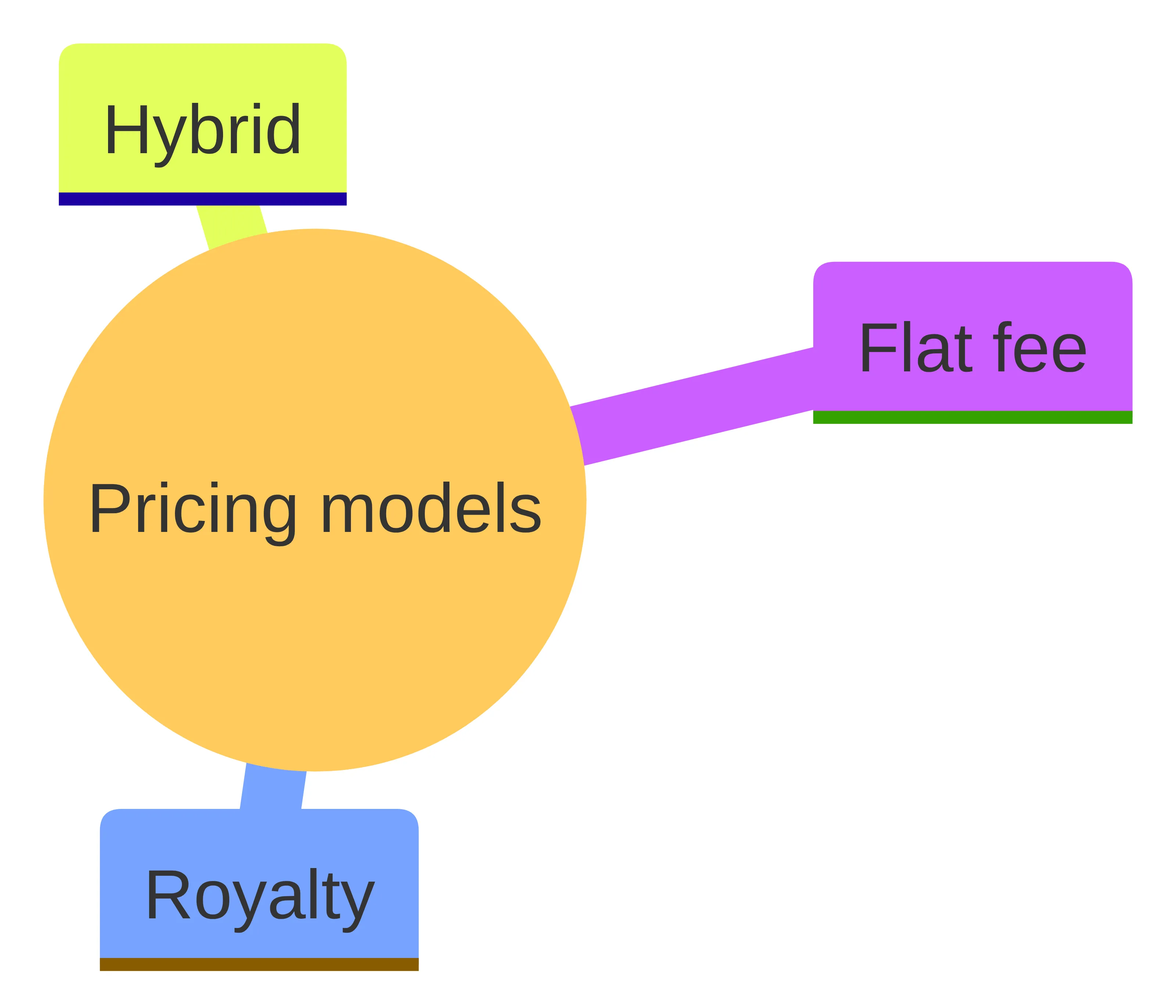
Surface pattern design work is commonly organized through three primary pricing models: flat fee, royalty, and hybrid arrangements. The right starting structure depends on whether the project is defined around a completed assignment, continuing product sales, or a combination of an upfront payment and future compensation.
| Pricing model | How payment works | Ownership and use question | Useful starting point |
|---|---|---|---|
| Flat fee | A single payment covers a defined scope of work. | A flat fee typically transfers all rights to the licensee or buyer, so the proposal must state what transfers. | Use when the work and payment can be defined before production or delivery. |
| Royalty | Ongoing payments are based on actual sales of products incorporating the pattern. | The designer typically retains ownership of the underlying design, while the client receives defined permission to use it. | Use when continuing product sales are part of the arrangement and can be addressed clearly. |
| Hybrid | An upfront payment is combined with ongoing royalties or other future considerations. | The agreement needs to distinguish the initial payment, continuing compensation, and rights attached to each. | Use when the initial creative work needs payment before future sales are known. |
A flat fee is not automatically a complete answer to a commercial brief. It becomes workable only after you define the scope and state whether the payment covers a transfer of rights or a narrower permission. A royalty is not automatically preferable either; it requires clear terms for the products and sales connected to the pattern. A hybrid structure can address both immediate creative work and future use, but it still needs precise boundaries.
Use the table as a conversation aid, not as a substitute for the project brief. Start by asking what the client needs to receive, what the client wants to do with it, and whether the commercial arrangement needs to account for future product sales. Then select the model that reflects those answers and price the creative work and rights with the same level of clarity.
Compare a commissioned buyout with a limited license
A commissioned buyout and a limited license solve different commercial problems. Treat these labels as a way to clarify the discussion, then write the actual rights in plain language rather than relying on the label alone.
| Consideration | Commissioned buyout | Limited license |
|---|---|---|
| Payment structure | Usually begins with a defined flat-fee discussion for specified creative work. | Can use a royalty or hybrid arrangement, with payment connected to the permitted use and, where applicable, product sales. |
| Ownership | A flat fee typically transfers all rights to the licensee or buyer. | Licensing can allow reproduction and distribution while you retain ownership of the pattern. |
| Permission | The client receives the rights stated as transferring in the agreement. | The client receives permission for the exact products, uses, territory, duration, and exclusivity stated in the agreement. |
| Future use | Additional use may not remain available to you if all rights have transferred. | Further uses can remain outside the license if the agreement does not grant them. |
| Pricing discussion | Focus on the defined creative scope and the value of the rights being transferred. | Separate the creative fee from the compensation for the requested license and its commercial limits. |
The buyout route may be easier to explain when the client needs ownership and the scope is settled before work begins. That convenience does not remove the need to list deliverables, revisions, files, payment stages, and the rights that transfer.
The limited-license route may fit when you want to retain ownership and the client needs permission for a defined commercial use. The licensing terms should identify the products and uses, state whether the client has exclusive use during the agreement period, and identify the geographic territory. If the client later asks to add products or expand the territory, treat that request as a change to the rights package rather than silently including it in the original fee.
Define exactly what the design work includes
The design scope turns an abstract request into work you can estimate, schedule, and price. A pattern commission should state what you will create, how many development stages are included, what the client will receive, and where the work ends.
Your scope can address these components:
- Direction: the subject, visual brief, references, palette, scale, and intended product.
- Artwork: original motifs, adapted artwork, repeat construction, or a combination of these.
- Pattern development: repeat styles, coordinates, alternate arrangements, or colorways.
- Production files: file types, dimensions, color specifications, resolution, and delivery format requested by the client.
- Review stages: the number of concepts, proofing rounds, included revisions, and approval points.
- Schedule: milestones, feedback deadlines, delivery dates, and the effect of delayed feedback or changed instructions.
- Exclusions: extra concepts, additional colorways, new products, expanded revisions, rush work, or other work outside the agreed scope.
A service scope can include repeat, coordinate, and colorway development for designs originated by you, other designers, or company archives. That range shows why the phrase custom pattern is not enough by itself to price an assignment. A repeat built from supplied artwork may require a different set of tasks from a new collection of motifs, while a coordinated group of patterns may involve more stages than a single repeat.
Use those headings to make the production side visible before you discuss rights. Each listed deliverable should have a clear place in the fee, and each unlisted request should have a clear route for a later change discussion.
Revision boundaries deserve special attention. State what counts as a revision, when feedback is due, and what happens if the direction changes after approval. This does not predict every creative decision, but it gives both sides a shared point of reference for additional work.
Price the requested usage as a separate decision
The requested usage determines the rights portion of the pricing conversation. A pattern intended for a single product in a defined territory is a different request from a pattern intended for several product categories with exclusive use across a broad market.
Map the usage package with six questions:
- Products: On which products may the pattern appear? List each product category rather than using a broad phrase such as all merchandise. Examples include fabric, stationery, wallpaper, and bedding.
- Permitted uses: May the client reproduce the pattern on finished goods, packaging, promotional material, digital assets, or another stated application? Include only the uses you agree to grant.
- Exclusivity: Will the client have exclusive use during the agreement period, or may other companies use the design too? The licensing terms should state that choice directly.
- Territory: Where may the licensee use the design? The licensing terms should identify the geographic territory rather than leaving location open-ended.
- Duration: What agreement period applies to the permission? Connect the duration to the use and exclusivity language so the end of the permission is understandable.
- Ownership: Is the client receiving ownership of the pattern or permission to use it under stated conditions? Do not let a payment label answer this question by implication.
These questions do more than add contract detail. They tell you what must be reflected in the compensation discussion. Adding a product category can expand the requested use; adding exclusivity can limit your ability to license the design elsewhere during the agreement period; adding territory can broaden the market covered by the permission.
Show the rights package as its own part of the quote. If the client has not decided between exclusive and nonexclusive use, present those as separate options with separate terms. If the client asks for ownership but has only described a narrow product use, ask whether the intended transfer is broader than the immediate application before you calculate the fee.
Treat royalty guidance as indicative, not automatic
Royalty percentages are starting points for a pricing discussion, not automatic answers for every surface pattern agreement. General industry guidance tends to land around 5-8% of net sales for apparel fabric, 5-10% for quilting and fabric collections, 5-12% for home decor, and 5-8% for stationery and gift.
Those ranges are category-based guidance; the terms for a particular project depend on its agreed commercial details. The percentage does not define the products, territory, exclusivity, duration, ownership, reporting basis, or creative scope. It also does not decide whether an upfront payment is appropriate.
Use a royalty discussion in this order:
- Identify the product categories covered by the permission.
- State the sales basis, including what the parties mean by net sales.
- Decide whether the arrangement includes an upfront payment, continuing royalties, or both.
- Set out the reporting and payment schedule in the commercial terms.
- State the territory, agreement period, exclusivity, and rights attached to the percentage.
- Explain what happens if the client adds a product or use outside the original package.
Those terms need to be written so you can tell what is paid at the beginning, what depends on product sales, and what obligation remains if the project changes.
If you do not know the product category, sales basis, or requested rights, do not select a percentage merely to make the quote look complete. Ask for the missing information, or present a conditional structure that shows how the amount would change when the commercial terms are settled.
Run an intake before naming a price
The project intake should collect the facts that determine the creative scope and the rights package before you offer a precise figure. A short email may be enough for an initial conversation, but the working brief should answer the following questions.
Commercial use
- What product or products will carry the pattern?
- Will the pattern be used for fabric, wallpaper, stationery, home goods, apparel, packaging, or another named application?
- Is the client commissioning a new design or asking to license an existing pattern?
- Which customers, markets, or sales channels does the client intend to serve?
Creative scope
- What subject, mood, motif set, scale, and repeat structure are required?
- Who supplies the references, artwork, or archive material?
- How many concepts, repeats, coordinates, colorways, and final files are needed?
- What technical specifications must the files meet?
- How many review rounds and revisions are included?
- Which milestones require approval before the next stage begins?
Name those services instead of hiding them inside a general design fee.
Rights and commercial terms
- Which products and uses will the license cover?
- Will use be exclusive during the agreement period, or may other companies use the design too?
- What geographic territory will the license cover?
- What duration applies to the permission?
- Does the client want ownership or defined permission to use the pattern?
- Will payment be a flat fee, royalty, hybrid, advance, or another agreed structure?
Review the answers above before discussing a fee. If several remain open, treat any figure as conditional and identify the decision that must be made before it becomes final.
Turn the brief into a quote and pricing discussion
The quote should show how the brief becomes a defined scope, a pricing model, and a rights package. Use a short sequence so the client can see what is included and what would require a new decision.
- Summarize the assignment. State the product, design direction, pattern type, intended deliverables, and approval milestones in plain language.
- List the creative work. Separate concepts, motifs, repeats, coordinates, colorways, technical preparation, revisions, and final files. State the included quantity or boundary for each item.
- Choose the payment model. Use a flat fee for a defined payment and scope, a royalty structure for continuing payments based on product sales, or a hybrid arrangement that combines an upfront payment with future compensation. The model should match the commercial terms rather than appear as an afterthought.
- Set and assess the creative fee. Turn the scope into line items, choose a unit for each one, and assign an amount to that unit for the pricing discussion. For example, record the number of concepts, motifs, repeats, coordinates, colorways, technical-preparation tasks, revision rounds, final files, and milestones, then calculate: creative fee = sum of (quantity × agreed amount per unit). If you are assessing a proposed total, allocate it across the same line items so you can see which work the amount covers and which work remains unpriced. Keep the production total separate from the rights package and show its payment schedule beside the relevant scope boundaries. If a unit amount or scope detail is still open, leave that line unresolved and present a narrower or broader scope option rather than filling the gap with an assumed market rate.
- Show the rights compensation. State whether the amount covers ownership or a license, then list the products, uses, territory, duration, and exclusivity covered by that amount.
- State assumptions and exclusions. Explain what the quote assumes about materials provided for the assignment, feedback timing, revisions, file specifications, expenses, taxes, production, and requests outside the agreed scope.
- Document milestones and billing. Connect each payment stage to a clear approval or delivery point. State what happens before work starts and what happens when a stage is approved.
- Record the decision. Put the accepted scope, fees, rights, schedule, and billing terms into the proposal or agreement before production begins.
The AIGA Standard Form recommends using Basic Terms and Conditions and Intellectual Property Provisions for all design assignments, with additional discipline-specific modules added as needed.
Keep the quote readable by using separate headings for creative work, expenses, and rights. If the client wants a lower total, change a stated variable such as the number of concepts, revision rounds, products, territory, duration, or exclusivity. Do not quietly remove a right or deliverable while leaving the original wording in place.
The result is a pricing discussion that can move in either direction. A narrower brief may reduce the scope or rights package; a broader commercial request may require more work, more permission, or both.
Know when to pause instead of guessing
The project information is not sufficient for a precise price when you cannot tell what work must be completed or what the client may do with the result. A confident-looking number does not solve an undefined brief.
Pause and ask for clarification if any of these points remain open:
- The product or product category is unnamed.
- The client has not decided between a new commission and an existing design license.
- The required repeat, coordinates, colorways, file specifications, or revision rounds are unclear.
- The client uses broad language such as all rights, worldwide, forever, or all products without defining the intended scope.
- Exclusivity, territory, duration, or ownership has not been discussed.
- The payment structure is undecided, especially where future product sales are part of the conversation.
- The schedule, approval stages, expenses, or billing points are missing.
- The client expects additional work but has not said whether it belongs in the original deliverables.
You can respond with options instead of a guessed figure. For example, offer a narrower product-and-territory license alongside a broader option, or show a defined creative scope with separate rights choices. Each option should state what changes in the work, permission, payment, or schedule.
Use a conditional estimate only when the condition is visible. Say that the amount depends on the final product list, rights package, or deliverables, then identify the information needed to settle it. A starting quote can guide a conversation, but it should not be presented as a formal quote or agreement while material terms remain undecided.
The practical boundary is simple: if you cannot describe the work and the permission in separate sentences, keep gathering information before you commit to a precise price.
Confirm the terms before work begins
The final proposal or agreement should make the creative scope, payment, schedule, and rights understandable without relying on assumptions. Before work begins, confirm the following in writing:
- The design direction, deliverables, repeat or colorway work, file specifications, revisions, and approval milestones.
- The creative fee, expenses, payment stages, billing schedule, and any royalty, advance, or minimum-guarantee terms.
- The products and permitted uses covered by the arrangement.
- Whether the client receives ownership or a license to use the pattern.
- The territory, duration, and exclusivity position.
- The process for approving extra work or changing the original brief.
They should also state whether the company has exclusive use during the agreement period or whether other companies may use the design, and identify the geographic territory where the licensee may use the design.
A qualified professional should decide individual legal, tax, or accounting questions for your situation; this framework is for organizing a pricing discussion, not replacing that advice.
Once the scope, fee, usage, and rights are clear, you have a defensible basis for the amount you propose and a practical way to discuss changes.
What should you clarify before agreeing to a surface pattern price?
What factors should I consider when pricing surface pattern design work?
Consider the complexity of the design, the exclusivity of the rights, the number of revisions, the deliverables required, the intended usage, the territory, and the duration of the license.
What are the primary pricing models for surface pattern design?
The three primary pricing models are flat fee arrangements, where a single payment covers the work; royalty arrangements, which involve ongoing payments based on sales; and hybrid arrangements that combine an upfront payment with future royalties.
How can I separate creative fees from licensing terms in my pricing?
Clearly define the creative fee based on the work required to create the pattern, and separately outline the licensing terms that specify how the client can use the design, including the products, territory, and duration.
What should I include in a project intake before discussing pricing?
Gather information on the product categories, intended uses, creative scope, required deliverables, rights package, and any specific terms related to exclusivity and territory.
How do I determine appropriate royalty rates for surface pattern licensing?
Use industry guidance as a starting point, which typically suggests rates around 5-8% for apparel fabric, 5-10% for quilting, and 5-12% for home decor, but adjust based on the specific terms of the agreement.
What should I clarify in the licensing terms for a surface pattern design?
Specify the exact ways the design can be used, the products it may appear on, whether the use is exclusive, the geographic territory, and the duration of the license.
When should I pause the pricing discussion instead of providing a quote?
Pause if key details are unclear, such as the product category, whether the client wants a new design or an existing license, or if the scope of work and rights package have not been fully defined.


comments +